Visa Categories and Cross-Continent Routing Define 2026 Fan Travel
The 2026 FIFA World Cup will be the first edition hosted by three nations: the United States, Canada, and Mexico. For fans, this means a tournament that stretches across an entire continent, with all the logistical complexity that entails. Unlike a single-host event where you land in one country and move between cities within a familiar framework, 2026 requires dealing with three separate visa regimes, a patchwork of flight routes with few direct connections between some host cities, and time-zone shifts that can disrupt sleep schedules for weeks. This feature breaks down the key travel considerations for fans planning to attend matches in multiple host countries, drawing on official visa guidance, airline route maps, and early planning trends observed in fan communities.
While the tournament is still roughly two years away as of early 2025, the planning window is already open. Ticket applications, accommodation bookings, and visa paperwork are on the horizon. Understanding the differences between each host country's entry requirements, the realities of cross-continental travel, and the balance of cost and convenience will be essential for anyone hoping to see matches in more than one nation. This article covers the major categories of fan travel logistics, from visa applications to border crossings, and offers practical takeaways grounded in the information available so far.
Three Nations, Three Visa Regimes, One Complicated Itinerary
The first hurdle for any international fan is understanding which entry documents are needed for each host country. The United States, Canada, and Mexico each operate distinct visa policies, and the requirements vary significantly depending on the traveler's nationality. For fans from visa-waiver countries—such as most European Union nations, Australia, Japan, and South Korea—the US offers the Electronic System for Travel Authorization (ESTA), which must be approved before boarding a flight. ESTA is valid for two years and allows stays of up to 90 days per visit, but it is not a visa; travelers can be denied entry at the border even with an approved ESTA. Canadian authorities use the Electronic Travel Authorization (eTA) for visa-waiver nationals, which is electronically linked to the passport and also valid for up to five years or until passport expiry. Mexico requires a Forma Migratoria Múltiple (FMM) for most visitors, which is typically obtained on arrival or online before travel. The FMM is a paper document that must be kept safe during the stay and surrendered upon departure. For fans holding passports from countries that do not have visa-waiver status with any of the three nations—such as many African, Asian, and Middle Eastern countries—the process becomes more complex: separate visa applications may be required for each country, often involving in-person interviews at embassies or consulates. Some nationalities can obtain a US visa and then use it to enter Mexico or Canada under certain conditions, but this is not universal. Fans planning to cross borders multiple times should consider applying for multiple-entry visas where available, as single-entry documents would require a new application for each return. The US Customs and Border Protection website and the Canadian immigration portal are the authoritative sources, but as of late 2024, both agencies have warned of potential processing delays due to increased demand around the tournament. A practical hedge: apply for all travel authorizations at least three to six months before departure, and carry photocopies of every document.
The Route Map: Direct Flights, Stopovers, and the Pacific Gap
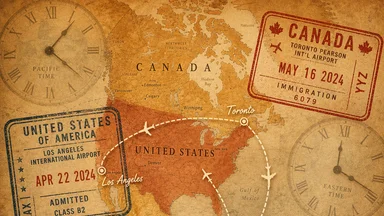
Once the visa situation is sorted, the next question is how to get between host cities. The 2026 tournament will feature 16 host cities: 11 in the United States, 2 in Canada, and 3 in Mexico. While some city pairs are well connected by direct flights, others require a connection or a long drive. For example, Los Angeles (LAX) and Vancouver (YVR) have multiple daily nonstop flights, but these are often expensive in summer, with fares routinely exceeding $400 round-trip if booked close to departure. Mexico City (MEX) and Guadalajara (GDL) are linked by a roughly 45-minute flight or a five-hour bus ride; the bus is cheaper but less convenient for a day trip. The real challenge comes with cross-border pairs: Toronto (YYZ) to Monterrey (MTY) has no direct flight; most itineraries connect through Dallas (DFW) or Houston (IAH), adding at least four hours of travel time. Similarly, Seattle (SEA) to Guadalajara has no nonstop service, though seasonal flights may be added for the tournament. European fans will likely use hubs like London Heathrow (LHR), Paris Charles de Gaulle (CDG), or Frankfurt (FRA) as stopover points, but this adds a third leg for those traveling between multiple host countries. Some travel agents are already marketing packages that include a central US hub—such as Dallas or Atlanta—as a base for radiating to multiple cities. The Pacific Gap, referring to the lack of direct flights between East Asian cities and many Mexican host cities, is a particular pain point for fans from Japan or South Korea, who may need to connect through Los Angeles or San Francisco. For fans driving between cities, the US-Mexico land border has several crossing points, but wait times can be unpredictable. The busiest pedestrian crossing is at San Ysidro between San Diego and Tijuana, which sees tens of thousands of crossings daily. Overall, the route map suggests that fans should plan for at least one connection between any two host cities in different countries, and budget extra time for delays.
Time-Zone Tolls: Sleep Schedules and Kickoff Clocks
The three host countries span four time zones: Pacific (US West Coast and Vancouver), Mountain (some US cities like Denver), Central (most of Mexico and US interior), and Eastern (US East Coast and Toronto). For fans traveling from Europe, the time difference to the West Coast is roughly eight to nine hours, meaning that a 1 p.m. kickoff in Los Angeles would be 9 p.m. or 10 p.m. in London—manageable, but a 8 p.m. match would start at 4 a.m. in the UK. Asian fans face a starker shift: a 1 p.m. match in Mexico City (Central Time) is 2 a.m. the next day in Tokyo. South American fans, by contrast, align reasonably well with US Eastern Time, which is only one or two hours ahead of most of the continent. Internal travel also imposes jet lag. A fan flying from Seattle (Pacific) to Guadalajara (Central) crosses two time zones, which is mild but still requires a day to adjust. The tournament schedule, which will likely include early group-stage matches in late morning local time to accommodate European television audiences, may help some fans but hurt others. For example, a 10 a.m. kickoff in Vancouver (Pacific) is 1 p.m. in New York but 6 p.m. in London and 2 a.m. in Tokyo. Fans traveling between multiple time zones should plan for at least one rest day between matches, especially if they are crossing three or more zones. Some fan groups on Reddit's r/worldcuptravel recommend arriving a week early to adjust if planning to attend matches on both coasts. The trade-off is clear: convenience for television viewers versus convenience for in-stadium fans, and the 2026 schedule will inevitably favor some regions over others.
Accommodation Pressure Points in Each Host Country
Finding a place to stay during the World Cup is already a concern, even two years out. In Canada, Vancouver hotel rooms have been reported as booked for key match dates as early as mid-2024, with Marriott Vancouver reportedly accepting waitlists. Toronto, with a larger hotel inventory, may have more availability but at prices that are expected to surge. In Mexico, Guadalajara and Monterrey have seen a spike in Airbnb listings, but local regulations in Mexico City cap short-term rentals in certain neighborhoods to preserve housing stock. The US host cities vary widely: Los Angeles and Dallas have substantial hotel capacity, but prices during major events can triple. Some fans are considering alternative accommodations such as hostels, university dormitories (some universities rent rooms during summer), or staying in suburbs with public transit connections. The Canadian dollar has weakened against the US dollar in recent years, which could make Canadian accommodation cheaper for US ticket holders, but the effect is modest. A practical tip: book refundable rooms early, then monitor prices as the tournament approaches. Some travel agents offer package deals that include accommodation and match tickets, but these often carry a premium. For fans on a budget, sharing rentals with other supporters via WhatsApp groups or fan forums is becoming common, though it carries risks. The key pressure points appear to be Vancouver, Guadalajara, and Monterrey, where supply is relatively tight compared to expected demand.
Border Crossing Realities: Land Ports and Secondary Inspections
For fans driving between the US and Canada or the US and Mexico, land border crossings present a different set of challenges. The US-Canada border at major crossings like the Ambassador Bridge (Detroit-Windsor) or the Peace Arch (Blaine-Surrey) can see waits of over three hours during peak summer weekends. NEXUS and Global Entry cardholders have dedicated lanes that reduce wait times significantly, but these programs require background checks and in-person interviews, which can take months to schedule. The US-Mexico land border is even busier: the San Ysidro port of entry near San Diego is the busiest land border crossing in the world, processing over 70,000 northbound pedestrians and 40,000 vehicles daily. Wait times can exceed two hours on weekends. Mexican customs regulations differ from US and Canadian rules: for example, Mexico restricts the import of certain electronics, such as drones, and limits the amount of cash that can be brought in without declaration. Canadian cannabis laws, which allow recreational use federally, conflict with US federal law, which still prohibits it. Fans crossing from Canada into the US may face secondary inspection if they admit to cannabis use, and US border agents can deny entry for such declarations. A practical hedge: avoid discussing cannabis at US border crossings, and declare all goods truthfully. Some fan communities advise carrying photocopies of visa documents, match tickets, and hotel confirmations to expedite processing. For fans with Global Entry, the program is valid at US airports and some land crossings, but not at Mexican immigration points.
Fan Communities and Group Travel Strategies
Given the complexity of multi-country travel, many fans are turning to online communities and group travel arrangements. Subreddits like r/worldcuptravel have become hubs for sharing route hacks, visa tips, and accommodation leads. WhatsApp and Telegram groups form around specific national supporter bases, coordinating shared car rentals or bus charters between cities. Some travel agencies such as Expedia are specializing in multi-country itineraries, offering packages that include flights, hotels, and match tickets, though these often come with a markup. Local football clubs in host cities may offer stadium shuttle services from central meeting points, similar to what was done during the 2014 World Cup in Brazil. For fans traveling alone, joining a supporter group can reduce costs and provide a safety net. One trend observed in early planning is the "hub-and-spoke" model: fans book a central city—often Dallas or Houston—and take day trips to nearby host cities like Mexico City or Monterrey by air. This reduces the number of hotel changes but adds travel time. Another strategy is to follow a single team's group-stage matches if they are clustered geographically. For example, if a team plays in Seattle, Vancouver, and Los Angeles, a fan could base themselves in the Pacific Northwest for the group stage. The balance of cost and flexibility is a constant theme: early booking locks in prices but commits to an itinerary that may change if the match schedule shifts. Some fans are buying refundable flights until the schedule is confirmed, then adjusting.
Health and Insurance Considerations
Travel across multiple countries also raises health and insurance questions. Each host country has its own healthcare system and recommended vaccinations. The US has no universal healthcare, and medical costs can be exorbitant; a simple emergency room visit can cost thousands of dollars without insurance. Canada and Mexico have public healthcare systems, but they may not cover visitors. Fans should purchase comprehensive travel insurance that covers medical evacuation, trip cancellation, and lost baggage. Some policies specifically cover World Cup-related disruptions, such as match cancellations or schedule changes. Vaccination requirements vary: the US and Canada recommend routine vaccines, but no mandatory shots for entry. Mexico may require proof of yellow fever vaccination if traveling from an endemic country. Fans with pre-existing conditions should carry sufficient medication and a doctor's note. Additionally, the summer heat in some host cities, such as Dallas or Monterrey, can be extreme, with temperatures exceeding 40°C (104°F). Hydration and sun protection are essential. In contrast, Vancouver and Toronto can be mild and rainy in June, so packing layers and rain gear is wise. A practical tip: check the CDC travel health notices for each country before departure, and carry a basic first-aid kit.
Local Transportation within Host Cities
Once fans arrive at a host city, getting to the stadium and around town requires planning. Public transit systems vary widely: Vancouver has an efficient SkyTrain network connecting the airport to downtown and the stadium (BC Place). Toronto's TTC subway and streetcars serve the city well, but match-day crowds can cause delays. Mexican host cities like Mexico City have extensive metro systems, but they can be crowded; the Estadio Azteca is accessible by metro line 2. Guadalajara's light rail and bus rapid transit cover most areas, while Monterrey's metro is limited. In US host cities, public transit is less comprehensive. Los Angeles has a growing rail system, but many venues like the Rose Bowl are best reached by shuttle or car. Dallas has a light rail (DART) that connects downtown to AT&T Stadium in Arlington, but the stadium itself is not directly on the rail line; a shuttle bus is needed. Many fans opt for ride-sharing services like Uber or Lyft, but surge pricing during events can be high. Some cities offer park-and-ride lots with shuttle services to stadiums. For fans staying in suburbs, renting a car may be necessary, but parking near stadiums is often expensive and limited. A practical tip: research stadium access guides on official tournament websites, and consider purchasing multi-day transit passes where available. Walking from central hotels to stadiums is feasible for some venues, such as SoFi Stadium in Los Angeles, which is walkable from nearby hotels in Inglewood.
What to Do Next
Based on the information available as of early 2025, several practical steps can help fans prepare for the 2026 World Cup. First, apply for Canadian eTA and US ESTA as early as possible—at least three months before travel—to allow for processing delays. Mexican FMM can be obtained online or on arrival, but having a printed copy is safer. Second, use award miles or points for long-haul flights, especially transatlantic or transpacific routes, as cash fares are expected to be high. Third, pack layered clothing for Canadian host cities in June, which can see temperatures ranging from 10°C to 25°C. Fourth, carry photocopies of all visa documents, match tickets, and passport pages, stored separately from the originals. Fifth, consider buying refundable flights and accommodation until the match schedule is released, then locking in non-refundable options once the itinerary is certain. Schedule changes may alter plans, so refundable bookings are recommended. Finally, join a fan community early to share information and potentially split costs. The 2026 World Cup promises to be a logistical adventure unlike any previous edition, and the fans who plan ahead will be best positioned to enjoy it.