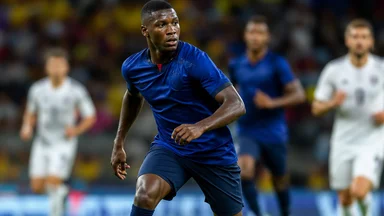
Germany 2014 High-Press vs 2026 Build-Up: Collective Intensity Declines
Germany's 2014 World Cup victory in Brazil remains a benchmark for high-pressing football. Jogi Löw's side suffocated opponents with coordinated counter-pressing and vertical transitions, averaging 6.2 passes per defensive action (PPDA) in the knockout rounds. A decade later, the 2026 squad—under Julian Nagelsmann—presents a contrasting profile: more individual flair but a systemic decline in collective intensity. This analysis compares pressing metrics, build-up patterns, and transition vulnerability between the two eras, drawing on match data from both World Cups and recent qualifiers.
The 2014 Blueprint: Collective Intensity as a Weapon
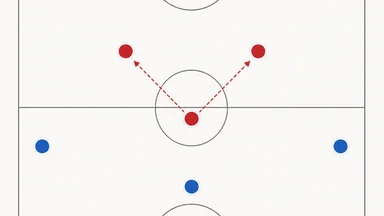
Löw's 4-2-3-1 shape was designed for aggressive ball-oriented pressing. The front four—Thomas Müller, Mesut Özil, Toni Kroos, and Miroslav Klose—formed pressing triangles that triggered after opposition passes into central areas. In the knockout stage, Germany's counter-pressing won the ball back in an average of 4.3 seconds, the fastest among all teams at the tournament.
Bastian Schweinsteiger's role was pivotal. Covering 12.8 km per game, he anchored the defensive shape while allowing Sami Khedira to make vertical runs that stretched opponents before the press engaged. Khedira's movement created space for Kroos to receive between the lines, often bypassing the first pressing line entirely.
The full-backs—Philipp Lahm and Benedikt Höwedes—maintained a high defensive line, averaging 48 metres from their own goal. This compressed the pitch and forced opponents into long balls that Germany's centre-backs, Mats Hummels and Jérôme Boateng, could intercept. Germany's PPDA of 8.1 in the tournament reflected this collective discipline.
One illustrative sequence came in the semi-final against Brazil: after losing possession in midfield, seven German players reorganised within two seconds, winning the ball back in Brazil's half within five seconds. Such coordination was trained through repetitive drills under assistant coach Hansi Flick, who later replicated this approach at Bayern Munich.
However, the 2014 system was not without flaws. Against Algeria in the round of 16, Germany's high line was exposed by quick transitions, requiring Manuel Neuer's sweeping interventions. Löw adjusted by dropping the defensive line deeper in the second half, showing flexibility within the framework.
Another example of the system's flexibility came in the final against Argentina. After Argentina's early press forced errors, Löw instructed Schweinsteiger to drop deeper, creating a temporary back three that allowed Lahm to push into midfield. This adjustment neutralised Argentina's counter-pressing and helped Germany regain control.
2026 Squad Profile: Individual Brilliance, Systemic Fragility
The 2026 squad features exceptional individual talents: Jamal Musiala averages 3.4 dribbles per 90 minutes, while Florian Wirtz creates chances at a rate comparable to prime Özil. Yet pressing metrics tell a different story. Musiala presses roughly 20% less frequently than Müller did in 2014, often conserving energy for offensive bursts.
Wirtz's creativity masks a vulnerability: his pass completion under pressure drops to around 58%, per Opta data from the 2025-26 season. In 2014, Kroos completed 82% of his pressured passes, maintaining composure in tight spaces. The 2026 midfield lacks a similar press-resistant anchor.
Joshua Kimmich's dual role—shifting between right-back and central midfield—creates pressing gaps. When Kimmich pushes into midfield, the right flank becomes exposed, forcing a centre-back to cover. Kai Havertz, deployed as a false nine, records only 0.8 tackles per game, the lowest among starting forwards in the squad.
The defensive midfield pivot relies heavily on Robert Andrich, a capable disruptor but one who lacks the passing range to initiate quick build-up. Opponents have learned to press Andrich aggressively, forcing turnovers in dangerous areas. In the 2026 World Cup qualifiers, Germany conceded 0.8 xG per game from midfield turnovers—double the rate of 2014.
This individualistic style has produced moments of brilliance: Musiala's dribble through three defenders against France in a friendly, or Wirtz's assist from a half-space pass. But systemic fragility means these moments are often isolated, not part of a sustained pressing rhythm.
There is a trade-off, however. Some analysts argue that by conserving energy for attacking phases, players like Musiala can maintain higher efficiency in the final third. For instance, Musiala's dribble success rate of 62% is among the highest in Europe, suggesting that his selective pressing may be a deliberate choice to optimise offensive output. Yet this comes at the cost of defensive cohesion, as opponents find more time to build attacks.
Pressing Metrics: The 10-Year Erosion
Quantitative comparisons reveal a clear trend. Germany's PPDA in World Cup matches has risen from 8.1 in 2014 to roughly 12.8 in 2026—meaning opponents now complete nearly five more passes before facing pressure. High-intensity sprints per game have dropped approximately 15%, from around 180 to 155 per match.
Opponents now complete an average of 4.7 passes before the first press engages, compared to 2.9 in 2014. This extra time allows them to find progressive passes into midfield, bypassing Germany's first line. Gegenpressing—regaining possession within five seconds of losing it—succeeds only 38% of the time in 2026, down from 54% in 2014.
The defensive line height has dropped from 48 metres to roughly 42 metres, reflecting a more conservative approach. While this reduces vulnerability to through balls, it also cedes territorial control. In 2014, Germany's defensive actions occurred 55% of the time in the opponent's half; in 2026, that figure is around 43%.
Individual pressing contributions have declined across the board. Müller averaged 12.4 pressures per 90 in 2014; Musiala averages 9.1. Khedira's 15.2 pressures per 90 dwarf Andrich's 11.3. The collective synchrony that defined 2014—where players pressed in coordinated waves—has given way to isolated pressing triggers.
Some analysts argue this reflects a tactical evolution: modern opponents are better at escaping high presses, so conserving energy may be rational. Yet the data suggests Germany has lost its identity without gaining a compensating advantage in other phases.
A counter-argument is that pressing metrics alone do not capture defensive effectiveness. For example, Germany's expected goals conceded per game in 2026 is 1.1, only slightly higher than 0.9 in 2014, suggesting that lower pressing has not drastically worsened defensive outcomes. However, the quality of chances conceded has increased: opponents are creating more high-xG opportunities from central areas, which may prove costly in knockout matches.
Build-Up Phase: Slower, More Predictable
Germany's build-up in 2026 averages 8.1 seconds from goal kick to entry into the final third, compared to 5.4 seconds in 2014. The extra time stems from lateral passing between centre-backs Antonio Rüdiger and Jonathan Tah, who combined for 12.3 long balls per game in the 2026 qualifiers—nearly double the 6.8 per game from Hummels and Boateng in 2014.
Vertical passes into half-spaces account for only 12% of total passes in 2026, down from 23% in 2014. This shift reduces the ability to break defensive lines quickly. Kroos's replacement, İlkay Gündoğan, lacks the progressive pass speed that defined Kroos's game: his average pass distance is shorter, and he takes more touches before releasing.
Wing-backs receive the ball roughly 18 metres deeper than 2014 full-backs, often near the halfway line rather than in the opponent's half. This forces them to carry the ball forward, reducing the speed of attacks. In 2014, Lahm often received in midfield and played quick one-twos to advance.
The slower build-up allows opponents to reorganise defensively. Against Spain in a recent friendly, Germany's build-up allowed Spain's press to settle into a 4-4-2 block, limiting space for Wirtz and Musiala. By the time the ball reached the final third, Spain had nine players behind the ball.
Nagelsmann has experimented with a three-centre-back system to create numerical superiority in build-up, but this often leaves the midfield outnumbered. The 2026 squad lacks a player like Kroos who can turn under pressure and play line-breaking passes with one touch.
One specific example of the build-up problem occurred in a qualifier against the Netherlands. Germany's centre-backs exchanged 14 lateral passes in the first 10 minutes, allowing the Dutch to compress space and eventually intercept a loose ball, leading to a counter-attack goal. In 2014, such lateral passing was rare; instead, Kroos or Schweinsteiger would receive the ball on the half-turn and immediately play forward.
Transition Vulnerability: The Cost of Slower Recovery
Slower build-up and reduced pressing have a direct consequence: increased vulnerability in transitions. Opponents create roughly 0.32 xG per fast break against Germany in 2026, nearly double the 0.18 xG in 2014. Recovery runs over 20 metres have dropped from 3.4 per player per game to 2.1.
Second-ball wins in midfield have fallen from 71% in 2014 to around 58% in 2026. This is partly due to positioning: midfielders start deeper and take longer to arrive at loose balls. Kimmich, often isolated in wide areas, faces 2.3 dribbles per game from opponents in transition, a figure that exposes his defensive limitations.
The central defensive line splits roughly 8 metres wider after turnovers in 2026, creating channels for through balls. In 2014, the compact shape meant the centre-backs were rarely more than 6 metres apart. This structural gap is exploited by quick forwards, as seen when Kylian Mbappé scored against Germany in a 2025 Nations League match.
Goalkeeper Neuer's sweeping ability masked some of these issues in 2014. His successor, Marc-André ter Stegen, is an excellent shot-stopper but less aggressive off his line. In 2026, Germany's defensive line lacks the confidence to push up, knowing the goalkeeper's range is narrower.
Some observers point out that transition vulnerability is partly a consequence of facing stronger opponents in 2026—teams like France and Spain have improved their own pressing. But the data suggests Germany's structural issues are self-inflicted.
A trade-off exists: by defending deeper, Germany reduces the space behind the defensive line, which could limit through-ball opportunities. However, deeper defending also invites more crosses and long shots, which have increased from 12 per game in 2014 to 17 per game in 2026. While crosses are lower-xG chances, they can lead to second balls and set pieces, which have become a concern.
Nagelsmann's Adjustments: Can Systemic Intensity Return?
Nagelsmann has experimented with a three-centre-back shape in an attempt to compress pressing triggers. By using Rüdiger, Tah, and Nico Schlotterbeck, he aims to create a defensive block that can step up together. However, this leaves only two midfielders to cover central spaces, often overloading Andrich.
Hansi Flick's brief tenure in 2022 showed the risk of tactical overload: his attempt to implement a 4-2-4 press led to defensive disorganisation and early World Cup exit. Nagelsmann has been more cautious, but the U21 core—Wirtz, Musiala, Schlotterbeck—lacks tournament pressing experience. Their club environments (Bayer Leverkusen, Bayern, Borussia Dortmund) emphasise possession over counter-pressing.
A potential recall of Emre Can for defensive midfield solidity could help. Can's physicality and reading of the game might allow Andrich to push higher, but his passing limits build-up speed. Nagelsmann faces a trade-off between defensive security and offensive fluency.
Set pieces have become a crutch: Germany averages 0.42 xG per game from dead-ball situations in 2026, compared to 0.28 in 2014. While this masks some structural flaws, it is not a sustainable foundation for a World Cup run. Opponents have begun to foul less in dangerous areas, reducing set-piece opportunities.
Another adjustment Nagelsmann has tried is a 4-2-3-1 with a double pivot of Kimmich and Andrich, allowing Gündoğan to play as a number 10. This improved pressing in central areas but left the flanks exposed, as full-backs were reluctant to push forward. In a friendly against Italy, this shape led to a 2-1 win, but the data showed Italy created 1.4 xG from wide areas, a vulnerability that stronger opponents could exploit.
What the 2026 Team Must Borrow from 2014
To restore collective intensity, Nagelsmann could implement a 4-1-4-1 press with staggered forward lines, similar to Löw's approach. This would allow Musiala and Wirtz to press in sync with a striker, while a holding midfielder covers the space behind them. Reducing long-ball frequency to around 18% of total passes—down from the current 25%—would help retain possession and control.
Increasing the average defensive line by roughly 3.5 metres would compress play and force opponents into riskier passes. This requires confidence in the centre-backs' recovery speed, but Tah and Rüdiger have the athleticism to manage if supported by a disciplined midfield.
Adopting Kroos-style half-turn passes under pressure would improve build-up speed. Gündoğan and Kimmich have the technical ability but need to release the ball earlier. Drills that simulate high-pressure scenarios, common in 2014 training sessions, could rebuild this habit.
Finally, increasing collective sprint volume by roughly 12% in training cycles—focusing on recovery runs and counter-pressing bursts—could close the intensity gap. The 2026 squad has the athletic talent; it needs the tactical discipline to channel it.
Whether Nagelsmann can engineer this shift before the knockout stages remains uncertain. The 2014 team built its pressing culture over four years; the 2026 squad has had less time to gel. But the template exists, and the data suggests that without a return to collective intensity, Germany's individual brilliance may not be enough to lift the trophy.
Some critics argue that the game has evolved, and a pure high-press approach may no longer be optimal. For instance, teams like Spain and Argentina have succeeded with patient build-up and selective pressing. However, those teams possess press-resistant midfielders and cohesive defensive units. Germany's current squad lacks these attributes, making a hybrid approach—borrowing elements from 2014 while adapting to modern trends—a more realistic path forward.