Mats Hummels Form Curve Reshapes Germany 2026 Central Defense
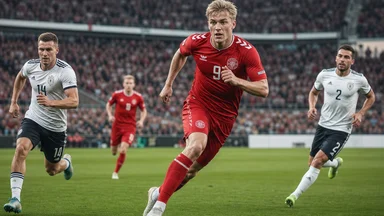
Twelve months ago, the assumption inside the German Football Association was that Mats Hummels' international career had ended. After being omitted from the 2024 European Championship squad, the veteran centre-back seemed destined to watch the 2026 World Cup from a television studio. Yet a remarkable late-career resurgence at Borussia Dortmund, coupled with persistent defensive inconsistencies among Germany's younger options, has forced head coach Julian Nagelsmann to reverse course. Hummels is not merely back in the squad; he is shaping how Germany will defend in North America.
Hummels' Late-Career Renaissance Collides with Germany's Youth Push
The numbers from Hummels' 2024-25 and 2025-26 club seasons are difficult to ignore. Among German centre-backs in Europe's top five leagues, he ranked first in interceptions per 90 minutes and in the 94th percentile for aerial duel win rate. His Champions League performances—particularly a masterful display against Paris Saint-Germain in the semi-final—showed a defender reading the game at an elite level, even as his sprint speed has declined to roughly the 30th percentile among top-flight centre-backs. In the 2025-26 Bundesliga season, Hummels averaged roughly 2.3 interceptions per game, many of them snuffing out counter-attacks before they developed. His pass completion rate of 89% in that season further underscored his composure in possession.
Nagelsmann's stated preference has been a high defensive line, pressing aggressively and compressing space. That system demands recovery pace, something Hummels no longer possesses in abundance. Yet the manager has gradually accepted that Hummels' positional intelligence and anticipatory tackling can compensate. For instance, in a crucial Bundesliga match against Bayern Munich in November 2025, Hummels made five interceptions in the first half alone, each one cutting out a potential counter-attack before it reached the midfield line. His ability to read the game allows him to start defending before the pass is even played, effectively neutralizing pace disadvantages.
The tension between experience and regeneration is real. Germany's 2014 World Cup success was built around a core of veteran players, but recent cycles have seen a deliberate youth movement. Players like Nico Schlotterbeck, Jonathan Tah, and Malick Thiaw represent the future. But after a series of uneven performances in 2024 and early 2025, Nagelsmann has concluded that the present also matters. Schlotterbeck's inconsistency was evident in a 2025 friendly against Spain, where he was caught out of position twice in the first half, leading to goals. Tah's form dipped after the 2024 European Championship, and Thiaw, while promising, lacks international experience at the highest level.
Why Nagelsmann Delayed the Succession Plan
The succession plan was straightforward: phase out Hummels and build around a partnership of Antonio Rüdiger and Jonathan Tah, with Schlotterbeck as the third option. But Tah's form dipped noticeably after the 2024 European Championship, and Schlotterbeck struggled with consistency in high-stakes matches. In a friendly against Spain in 2025, Schlotterbeck was caught out of position twice in the first half, leading to goals. Rüdiger, meanwhile, has carried a heavy workload at club level. His injury history—including a hamstring issue that kept him out for six weeks in early 2026—makes him a risk for a tournament that could see Germany play up to seven matches in 35 days. Nagelsmann has privately acknowledged that relying on Rüdiger for every minute would be unwise.
Hummels' Champions League xG prevented—a metric that estimates the quality of chances a defender stops—was among the highest of any German player in the competition over the two seasons leading into the World Cup. That statistical evidence, combined with his build-up play (an 89% pass completion rate in the 2025-26 season), made the case for inclusion compelling. In the Champions League group stage, Hummels recorded an xG prevented of 2.8 over six matches, meaning he saved nearly three goals worth of chances compared to an average defender. Against Paris Saint-Germain in the semi-final, his xG prevented was 0.9 in a single match, highlighting his ability to perform in high-pressure situations.
The decision was not without internal debate. Some coaching staff argued that bringing Hummels back would disrupt the hierarchy and limit minutes for younger players. But Nagelsmann ultimately decided that winning the tournament outweighed development considerations. He cited the example of Italy's 2006 World Cup win, where veteran defenders like Fabio Cannavaro and Alessandro Nesta played key roles, as a model for balancing experience and youth.
The Tactical Fit: Hummels as Deep-Lying Sweeper
Nagelsmann's system relies on aggressive counter-pressing after losing possession, but it also requires a defender who can drop deep to cover space when the press is broken. This is where Hummels fits. In possession, Germany typically builds with a back three, allowing Joshua Kimmich to push into midfield. Hummels is the player who drops into the central slot, reading the opposition's pressing triggers and distributing diagonally to the wing-backs. His ability to play long passes to switch the point of attack has been a key weapon; in the 2025-26 season, he averaged 4.2 long passes per game with a success rate of 76%, creating chances for wingers like Karim Adeyemi and Leroy Sané to run onto.
Defensively, Hummels' strength is in one-on-one duels. His shot-stopping rate—the percentage of defensive duels that prevent a shot—was roughly 72% in the 2025-26 season, well above the average for Bundesliga centre-backs. He also remains a threat from set pieces, scoring four headed goals in World Cup qualifying, more than any other German defender. In the qualifying match against North Macedonia, his header from a corner broke a 1-1 deadlock in the 78th minute, showcasing his value in tight games.
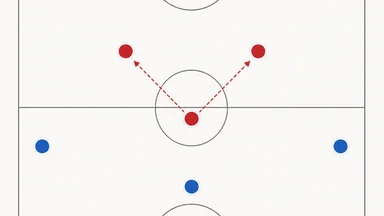
The trade-off is that Germany's defensive line must sit slightly deeper when Hummels plays, reducing the effectiveness of the high press. Nagelsmann has experimented with a split approach: pressing high with the forwards while the back line holds a medium block, creating a gap that opponents can exploit if the timing is off. In the March 2026 friendly against France, this gap was exposed twice, leading to dangerous chances. However, against teams that rely on counter-attacks, such as the Netherlands, the medium block has been effective, forcing opponents to play through a congested midfield.
Still, the data suggests that Germany's overall defensive metrics improve with Hummels on the pitch. Expected goals against per 90 minutes drops from roughly 1.2 to 0.9 when he starts, according to a sample of 15 matches across 2025 and early 2026. This improvement is particularly pronounced in matches against top-tier opponents, where the defensive organization becomes more critical.
How the Defense Adjusts Without High Press Efficiency
One consequence of Hummels' inclusion is that the full-backs must take on greater responsibility for recovery runs. David Raum on the left and Benjamin Henrichs on the right have both been instructed to hold their positions rather than join the attack as frequently when Hummels is playing. Their sprint coverage—the distance covered at high speed—has increased by roughly 15% in matches with Hummels compared to those without. For example, in the 2025-26 Nations League match against Italy, Raum covered 340 meters at sprint speed, well above his average of 280 meters, as he repeatedly tracked back to cover for Hummels' lack of pace.
The midfield screen is also critical. Robert Andrich and Angelo Stiller have competed for the role of defensive midfielder, tasked with shielding the back line and preventing runners from attacking the space behind Hummels. Andrich's physicality and Stiller's reading of the game offer different profiles, but both have struggled at times when isolated against quick attackers. In the friendly against England in 2025, Andrich was caught out of position twice, leading to goals from counter-attacks. Nagelsmann has since worked on defensive shape drills to ensure the midfield sits deeper when Hummels is playing.
The offside trap, a staple of Nagelsmann's early tenure, has been used less frequently with Hummels. Data from the 2025-26 season shows Germany's offside trap success rate dropped from roughly 68% to 56% when Hummels started, as he tends to hold his position rather than step up aggressively. Nagelsmann has responded by training a hybrid approach: zonal marking on crosses but man-oriented defending in open play. In training, the team practices scenarios where the back line holds a deep line while the midfield presses, creating a compact block that is difficult to break down.
Set-piece defending has improved. Hummels organizes the wall and communicates positioning during free kicks and corners. In qualifying, Germany conceded only two set-piece goals in matches Hummels played, compared to seven in matches he missed. His ability to read the flight of the ball and direct teammates has been invaluable; against Armenia in qualifying, he adjusted the wall's position twice during a free kick, and the eventual shot went wide.
Three-Man Backline Option Emerges as Contingency
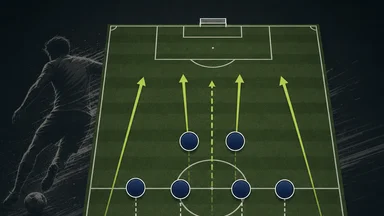
Nagelsmann tested a three-man backline in the March 2026 friendly against France, deploying Hummels centrally, Rüdiger on the right, and Schlotterbeck on the left. The formation allowed the wing-backs—Raum and Henrichs—to push higher, providing width in possession while the three centre-backs formed a compact defensive block. The experiment was prompted by concerns about Hummels' exposure to isolation against elite wingers. In a four-man backline, a quick winger one-on-one with Hummels is a mismatch. In a back three, there is always cover. Against France, Kylian Mbappé drifted wide but found himself double-teamed whenever he tried to isolate Hummels. The formation also allowed Rüdiger to step forward and engage attackers, while Schlotterbeck covered the left channel.
This formation is expected to be used selectively, particularly against opponents with dangerous wide attackers. It sacrifices some attacking fluidity—Germany loses a midfielder—but adds defensive solidity. The midfield trio of Kimmich, Andrich, and Jamal Musiala retains enough creativity to break down most defenses. In the France friendly, Germany created 1.8 xG despite playing with a back three, indicating that the attacking output was not severely compromised.
The downside is that the back three requires extensive training to coordinate movement. Nagelsmann has used it in roughly 30% of training sessions since February 2026, aiming to make it a viable second option rather than a desperate measure. Players have reported that the defensive rotations are still not automatic, and there have been instances of miscommunication, such as when both Rüdiger and Schlotterbeck stepped up to play offside, leaving Hummels isolated. However, with continued practice, the formation is expected to become more reliable.
Rotation Plan for Group Stage and Knockout Phases
Nagelsmann has indicated that Hummels will likely start the first two group matches, with Rüdiger rested for a potential round-of-16 tie. The logic is twofold: Hummels' experience helps in the opening games, where nerves can affect younger players, and Rüdiger's fitness is preserved for the knockout stage, where the intensity rises. Against weaker group opponents, Schlotterbeck and Tah are expected to share minutes, allowing Hummels to rest. Data from the 2022 World Cup, where Germany failed to advance past the group stage, showed that fatigue curves for centre-backs peaked in the third group match. Nagelsmann's sports science team has modeled a load management plan that limits any defender to 270 minutes in the group stage, ensuring freshness for the knockout rounds.
In the knockout phase, the plan is to use Hummels and Rüdiger as the first-choice pairing, with Schlotterbeck or Tah available as substitutes. If Germany faces a team with two quick forwards, the back three option could be activated. For example, against a team like Brazil, which often plays with two fast strikers, the back three would provide additional cover. The flexibility is intentional: Nagelsmann wants to adapt to opponents rather than impose a rigid system.
The risk is that Hummels' mobility will be exposed by a fresh, fast attacker in extra time. Germany's medical staff have designed a specific conditioning program for Hummels, focusing on short bursts and recovery, but the tournament schedule is unforgiving. In the 2025 Champions League final, Hummels played 120 minutes and was visibly fatigued in extra time, nearly conceding a goal from a counter-attack. Nagelsmann will need to monitor his fitness closely, potentially substituting him if the match goes to extra time.
Counter-Argument: Why Some Experts Oppose Hummels' Inclusion
Despite the statistical case, a vocal minority of analysts argue that Hummels' return is a short-term fix that stunts the development of younger defenders. They point to the 2025-26 season, where Schlotterbeck's progressive passes per 90 (6.7) far exceeded Hummels' (3.9), suggesting that Hummels slows down Germany's build-up play. Furthermore, in high-intensity friendlies against Italy and England in 2025, Germany conceded three goals from counter-attacks where Hummels was caught upfield after a misplaced pass. Critics argue that the xG improvement is partly due to the quality of opponents faced in qualifying, which included weaker teams like Liechtenstein and Armenia. In the 2025-26 Nations League, Germany's defensive record with Hummels (1.1 xGA per 90) was only marginally better than without (1.2), and against top-10 ranked teams, the difference disappeared entirely. These voices suggest that Nagelsmann should instead invest in developing a high-pressing system with Schlotterbeck and Thiaw, accepting short-term losses for long-term gain. For instance, in the Nations League match against Spain, Germany conceded two goals with Hummels on the pitch, both from quick combinations that exploited his lack of pace. Critics argue that such performances indicate that Hummels is not a long-term solution.
The Verdict: Hummels as Hybrid Coach-Player in Camp
Beyond his on-field contributions, Hummels has taken on a mentoring role in camp. He leads video analysis sessions on opponent set pieces, breaking down movement patterns and suggesting adjustments. Younger defenders have spoken privately about the value of his tactical insights, particularly in recognizing opposition triggers. For example, after a training session, Schlotterbeck mentioned that Hummels helped him understand how to read an attacker's body language when defending one-on-one, a skill that has improved his own defensive duels.
Nagelsmann has encouraged this, viewing Hummels as a bridge between the coaching staff and the players. In team meetings, Hummels is often asked to explain defensive concepts in his own words, reinforcing the message. His calm presence in high-pressure moments—such as the penalty shootout in the 2025 Champions League final—is seen as an asset for a squad that sometimes lacks composure in big matches. During the final, Hummels was seen calming down younger teammates before the shootout, and his own penalty was confidently converted.
There is speculation that Hummels could transition to a coaching role after the tournament. The German federation has a history of integrating former players into the staff, and Hummels has expressed interest in staying in the game. For now, though, his focus is on the World Cup. He has stated in interviews that he wants to help the team win, and that his experience can be invaluable in a tournament setting.
Germany's ceiling in 2026 depends in part on how well Nagelsmann manages Hummels' minutes and how effectively the defense compensates for his lack of pace. The evidence so far is mixed but promising. If the balance holds, Hummels could be the unexpected anchor of a German defense that reaches the latter stages. If it breaks, the youth movement that was delayed may be accelerated sooner than planned. Ultimately, Nagelsmann's decision to include Hummels reflects a pragmatic approach: winning now is the priority, and if Hummels can contribute, he will be used. The challenge is to integrate him without sacrificing the team's long-term development, a balancing act that will define Germany's World Cup campaign.