Congo DR Defensive Compactness and Counter-Speed Define 2026 Group Path
For the first time since 1974, Congo DR will appear on football's biggest stage. Their path to the 2026 World Cup was not built on flair or possession dominance, but on a rigid defensive structure and the ability to transition from defence to attack in seconds. In an era when elite nations prioritise positional play and high pressing, Congo DR offer a throwback to a more reactive, disciplined style. Whether that approach can yield results against Brazil, Croatia, and New Zealand in the group stage is one of the tournament's more intriguing tactical subplots.
Defensive Compactness as the Foundation
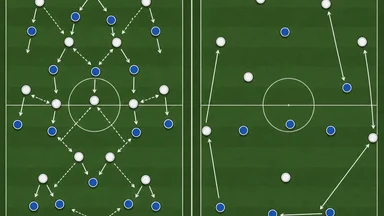
Congo DR's defensive organisation is their defining characteristic. Under Sébastien Desabre, the side typically sets up in a 4-4-2 block that narrows significantly when out of possession. The full-backs tuck inside to protect central spaces, effectively creating a 4-2-2-2 shape that funnels opponents into wide areas. Central midfielders often drop between the centre-backs to form a temporary back six, making it difficult for opponents to play through the middle.
This compactness forced opponents into long balls during qualification. According to data from the CAF group stage, Congo DR's opponents averaged 42 long passes per match — roughly 15 more than their usual output. The tactic worked: Congo DR conceded only 0.8 expected goals per 90 minutes across their six group games, the best defensive record in their qualifying section. Captain Chancel Mbemba, the central defender, organises the line with constant communication, ensuring the block shifts as a unit.
The trade-off is that Congo DR often surrender possession willingly. In qualifiers, they averaged around 35% possession, dropping as low as 29% in their pivotal 1-0 win over Senegal. This invites pressure, but the team has shown discipline in maintaining shape for long stretches. Opponents often grow frustrated, forcing passes that the compact block can intercept. The approach is not pretty, but it is effective.
However, this defensive compactness is not without its vulnerabilities. When facing elite teams with exceptional individual dribblers — such as Brazil's Vinícius Júnior — the narrow block can be stretched laterally. Quick switches of play force Congo DR's midfield to shift horizontally, and if they are a step slow, gaps appear between the full-back and centre-back. In their friendly against Algeria in 2024, Congo DR conceded two goals from exactly such switches, with Riyad Mahrez exploiting the space behind the left-back. Desabre responded by instructing his wide midfielders to track runners more diligently, but the issue remains a concern against top-tier wingers.
Another subtle risk is the mental fatigue of defending for long periods. In qualifiers, Congo DR often faced spells of 15–20 minutes of sustained pressure. Against Senegal, they endured a 17-minute stretch in the second half where they did not touch the ball in the opposition half. Maintaining concentration through such phases requires immense discipline, and any lapse — a mistimed tackle, a miscommunication — can be costly. The team's fitness levels, honed through specific high-intensity interval training under Desabre, have been praised, but the World Cup's pace may push them to their limits.
Transition Speed Exploits Gaps
If the defence is the anchor, the counter-attack is the sword. Congo DR's transitions are designed to be rapid and direct. Once possession is won, the team looks to release wingers Yoane Wissa and Théo Bongonda into space behind the opposition full-backs. Wissa, who averages 3.4 dribbles per 90 minutes, is particularly dangerous in one-on-one situations. Central forward Cédric Bakambu acts as the hold-up man, allowing runners to join from deep.
The three-man counter-attack is a rehearsed pattern. Within six seconds of winning the ball, Congo DR aim to have three players attacking the penalty area. This speed caught higher-ranked opponents off guard in qualifiers. They won 14 points from losing positions — a testament to their belief that one quick break can change a match. Set-piece delivery from left-back Arthur Masuaku also provides a secondary threat; his inswinging corners have produced several goals.
Critics argue that this reliance on transitions makes Congo DR predictable against disciplined defences. If opponents sit deep themselves, Congo DR lack the technical quality to break down a compact block. Their build-up play is often hurried, leading to turnovers in midfield. Desabre has attempted to address this by encouraging Bakambu to drop into half-spaces, but the results have been mixed. In their 0-0 draw against Morocco, Congo DR attempted only 187 passes in the entire match, the lowest of any qualifier. Their passing accuracy was 63%, well below the tournament average. This suggests that when the counter-attack is not on, they struggle to retain possession and relieve pressure.
To counter this, Desabre has introduced a secondary pattern: a longer ball to Bakambu, who then flicks it on to a running winger. This bypasses the midfield entirely and can catch a high defensive line off guard. However, it requires precise execution and often results in a 50-50 challenge. Against Croatia's experienced defence, such gambles may be too risky. Another option is to utilise the pace of full-back Gédéon Kalulu, who can overlap on the right. Kalulu's average speed of 32 km/h in transitions offers an additional outlet, but he is often instructed to stay back to maintain defensive shape. Desabre may need to loosen that restriction against New Zealand, where a goal is essential.
Qualifying Campaign: Pragmatism Over Polish
Congo DR's qualifying campaign was a masterclass in pragmatism. They finished top of a group that included Senegal, Morocco, and Tanzania, taking 14 points from six matches. The defining result was a 1-0 home win over Senegal, where they had 29% possession but scored from a corner. The away draw against Morocco — a 0-0 in which they used a 5-4-1 block for the entire second half — showed their ability to absorb pressure.
Their attacking numbers were modest: 11 goals from 8.9 xG in the group stage. This suggests they were slightly clinical rather than prolific. The playoff against Egypt went to penalties after a 1-1 aggregate draw, with goalkeeper Lionel Mpasi saving two spot-kicks. Congo DR's FIFA ranking of 67th at the time of the draw undersells their resilience. They are a team greater than the sum of their parts.
Some observers question whether this style can hold up over three group matches against elite opposition. In qualifying, they faced Senegal and Morocco — both strong sides — but the intensity of a World Cup group stage is a different test. Fatigue and discipline must hold for 270 minutes of football. Additionally, Congo DR benefited from a favourable schedule in qualifying: they played Senegal at home in matchday 5, when the group was still open, and faced Morocco on matchday 2 before the latter had fully gelled. At the World Cup, every match is against a motivated, well-prepared opponent.
Another factor is the absence of a standout creative midfielder. In qualifiers, Congo DR's average of 0.9 key passes per 90 from central midfield was the lowest among all qualified African teams. Samuel Moutoussamy, their most advanced midfielder, often drops deep to receive the ball but lacks the vision to play incisive through-balls. This forces the team to rely on wingers for creativity, which can be nullified by disciplined full-backs. Desabre has experimented with playing two strikers to create overloads in the box, but this leaves the midfield exposed. The trade-off between attacking threat and defensive solidity is a constant dilemma.
Group Stage Matchups Demand Discipline
Congo DR open against Brazil, historically the tournament favourites. Avoiding an early red card will be paramount; the team cannot afford to go a man down against a side that can exploit space. Expect a deep 5-3-2 block, with Bakambu isolated upfront. The second match against Croatia pits them against Luka Modrić's midfield control. Congo DR's central midfielders will need to close passing lanes aggressively to prevent the Croatian metronome from dictating tempo.
The final group game against New Zealand is the match Congo DR must win. New Zealand's physical style and set-piece threat will test the defence. Congo DR are likely to face 60% or more possession in the first two games, meaning their set-piece routines — both attacking and defending — will be crucial. Taller opponents may exploit Congo DR's relative lack of height in the box. Congo DR's average height in the starting XI is approximately 1.82 m, while New Zealand's is 1.86 m, with several players over 1.90 m. This could be a decisive factor in dead-ball situations.
Desabre has hinted at tactical flexibility, possibly shifting to a back five for Brazil and Croatia before reverting to a more conventional 4-4-2 against New Zealand. The key will be maintaining concentration across all three matches. One lapse in a low-block system can be fatal. To prepare, Congo DR have scheduled friendlies against teams that mimic their opponents' styles: a South American side to simulate Brazil's flair, a European side with a strong midfield to mimic Croatia, and a physical Oceanic side to replicate New Zealand. These matches will test their adaptability.
Another critical aspect is managing the emotional intensity. For many players, this is their first World Cup. The occasion can lead to over-excitement or tentativeness. Desabre has emphasised mental preparation, bringing in a sports psychologist to work with the squad during training camps. The team's performance in high-pressure qualifiers — particularly the penalty shootout against Egypt — suggests they have the mental resilience to handle big moments, but the World Cup stage is a different level.
Key Individuals Under Spotlight
Coach Sébastien Desabre has been in charge for roughly 18 months, instilling the defensive discipline that defines the side. His tactical adjustments — such as instructing full-backs to stay deep against pacey wingers — have been praised. Goalkeeper Lionel Mpasi posted a 78% save rate in qualifiers, including crucial stops in the playoff. Central defender Henock Inonga Baka averages 5.1 clearances per 90, often the last line of defence.
In midfield, Samuel Moutoussamy provides creativity with 2.3 key passes per game, though his defensive work rate can be inconsistent. Left winger Théo Bongonda has recorded speeds over 35 km/h in transition, making him a weapon on the break. The squad includes eight Europe-based players, but none at the very top clubs — a reminder that Congo DR rely on collective organisation rather than individual brilliance.
The spotlight will also fall on captain Chancel Mbemba, who must marshal a defence that will face relentless pressure. His experience at club level (including Champions League football) is vital for a side that lacks tournament experience as a group. Mbemba's leadership extends to organising set-piece defence, where he often marks the opposition's tallest player. His ability to read the game and make last-ditch interventions will be crucial against Brazil's fluid attack.
Another player to watch is right-back Gédéon Kalulu. While primarily defensive, his pace on the overlap could provide an extra dimension in attack. In qualifiers, Kalulu created three big chances from his overlapping runs, second only to Wissa. However, his forward forays leave space behind, which opponents like Croatia's Ivan Perišić could exploit. Desabre may choose to restrict his attacking duties against Brazil and Croatia, unleashing him only against New Zealand.
Up front, Cédric Bakambu carries the goal-scoring burden. He scored five goals in qualifying, including the decisive penalty in the playoff shootout. His hold-up play and ability to draw fouls are essential for relieving pressure. Bakambu's movement off the ball — often drifting to the left channel to receive passes — creates space for Wissa to cut inside. If Bakambu is nullified, Congo DR's attacking threat diminishes significantly. His backup, Simon Banza, has less international experience but offers a more physical presence. Desabre may use Banza as a late substitute to exploit tired legs.
Tactical Adjustments for Higher-Level Opponents
Desabre has prepared several tactical variations for the group stage. Against Brazil, Congo DR are expected to shift to a 5-3-2, with the wing-backs instructed to stay deep and not engage in attacking runs. The midfield press triggers are set by Desabre based on opposition patterns — usually when the ball goes to a full-back. The defensive line holds at the edge of the 18-yard box, conceding space outside but protecting the penalty area.
Bakambu's role becomes crucial in this setup. He drops into the half-spaces to link play, attempting to hold up the ball long enough for midfield runners to support. This worked well against Senegal but failed against Morocco's compact defence. The team's ability to execute these adjustments under pressure will determine their fate.
Critics point out that Congo DR's lack of a reliable second striker limits their attacking options. If Bakambu is nullified, the team often resorts to long shots or hopeful crosses. Desabre has experimented with a two-striker system in friendlies, but results were unconvincing. In their 2-1 loss to Ivory Coast in a friendly, the two-striker setup left the midfield overrun, and Congo DR conceded three big chances from central areas. The trade-off between attacking potency and defensive stability is a constant challenge.
Another adjustment involves set-piece routines. Congo DR scored four goals from set pieces in qualifying, accounting for 36% of their total. Desabre has worked on various routines, including near-post flick-ons and short corners to create crossing angles. Defensively, they have practised zonal marking to counter tall opponents. Against New Zealand, set pieces could be the deciding factor, and Congo DR will need to be clinical from dead-ball situations.
Desabre has also prepared for different match scenarios. If Congo DR go behind early, they may switch to a more aggressive 4-3-3, pushing full-backs higher and pressing more intensely. However, this leaves them vulnerable to counter-attacks. In their qualifier against Tanzania, they trailed 1-0 at half-time but won 2-1 after switching to a 4-3-3 and scoring two quick goals from turnovers. This flexibility gives them options, but it also requires players to adapt quickly to new roles.
Historical Context and Realistic Ambition
Congo DR's only previous World Cup appearance was in 1974, when they recorded a single win — 3-0 against Australia — before being eliminated in the group stage. That team remains a touchstone for the current generation. The goal for 2026 is to reach the round of 16, likely requiring four points. A draw against Croatia and a win over New Zealand is the most plausible path.
Some analysts compare Congo DR's potential run to that of Costa Rica in 2014, who advanced from a group containing Uruguay, Italy, and England using a similar low-block, counter-attacking style. The comparison is flattering but not unreasonable: both teams rely on defensive organisation, set-piece efficiency, and a talismanic forward. However, Costa Rica had a world-class goalkeeper in Keylor Navas; Congo DR's Mpasi is less proven at the highest level. Additionally, Costa Rica's group featured Uruguay (who were without Luis Suárez for the first match due to suspension) and an ageing Italy side. Congo DR's group includes Brazil, perennial favourites, and Croatia, recent semi-finalists. The challenge is steeper.
Realistically, Congo DR are likely to finish third in their group. But their style could trouble any opponent on an off day. For a nation that has waited 52 years for a second World Cup appearance, that is enough to dream on. The team's journey has already inspired a generation of young players in the country, and a strong showing — even without advancing — could boost football development in Congo DR for years to come.
Ultimately, Congo DR's 2026 World Cup campaign will be a test of whether extreme defensive pragmatism can still succeed at the highest level. In a tournament increasingly dominated by possession-based systems, their approach is a fascinating counterpoint. Whether they can execute it with the necessary discipline and a touch of luck will determine if they can create a memorable underdog story.