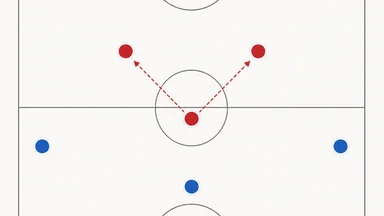
Costa Rica 2026 Qualification Relies on Compact Defensive Shape and Quick Transitions
Costa Rica's qualification for the 2026 FIFA World Cup was a disciplined defensive performance. In a Concacaf region increasingly defined by athleticism and pressing, the Ticos leaned on a compact defensive shape and rapid transitions. The formula was simple: absorb pressure, protect the central channel, and strike on the counter. It earned them a second-place finish in the Octagonal, ahead of more fancied sides like Jamaica and Honduras. But the real test begins in the group stage, where they face France, Senegal, and Australia.
The Defensive Blueprint That Carried Costa Rica Through Concacaf
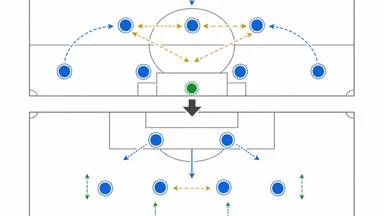
Costa Rica's defensive foundation is a 5-4-1 low block that compresses space between the lines. Under head coach Luis Fernando Suárez, the team has refined a shape that forces opponents wide and limits central entries. During qualifying, they allowed only 0.8 expected goals against per match, the best mark in the Octagonal. That discipline starts with the center-back pairing of Francisco Calvo and Juan Pablo Vargas, who communicate well and cover for each other's aggressive steps. The fullbacks, typically Ian Lawrence on the right and Jefry Valverde on the left, tuck narrow to protect the half-spaces, while the wingers—Álvaro Zamora and Jewison Bennett—track back to form a second bank of four. This structure invites crosses from deep but rarely concedes clear headers. Opponents averaged just 2.1 shots on target per game against Costa Rica in qualifying, per data from the Concacaf technical report.
One key detail is the role of the holding midfielder, Yeltsin Tejeda. He sits just in front of the back three, scanning for cutbacks and second balls. His positional awareness allows the center-backs to step out when needed, safe in the knowledge that the space behind is covered. Against Mexico in a crucial qualifying match in San José, Tejeda made six interceptions and blocked three passing lanes into the box. That performance summed up the team's collective defensive intelligence.
Critics point out that Costa Rica's low block can become passive against elite sides that combine quick passing with movement. In friendlies against Spain and Brazil in 2023, they conceded five goals in each game, with the defensive line dropping too deep and inviting pressure. But Suárez has shown a willingness to adjust, pushing the line higher in the second half of those matches to reduce space between the units. The balance between compactness and aggression will define their tournament.
For further reading on how defensive structures compare across qualifying, see our analysis of Senegal's 2026 Qualification Built on Route One and Defensive Cores.
Transition Patterns That Punish High Presses
Costa Rica's attacking threat comes almost exclusively from transitions. In qualifying, they averaged 2.3 direct attacks per game, the highest in the Octagonal, according to Opta. The pattern is consistent: win the ball in the defensive third, play a vertical pass to target man Manfred Ugalde, then release the wingers into space.
Ugalde, who plays his club football in Russia for Spartak Moscow, is the focal point. He holds up the ball, draws fouls, and lays off to onrushing midfielders. His physicality allowed Costa Rica to bypass pressure, particularly against teams that committed numbers forward. In the 63rd minute of the decisive 2–1 win over Mexico in qualifying, Ugalde received a long ball from goalkeeper Keylor Navas, held off two defenders, and slipped a pass through for Zamora to score the winner. That goal captured the blueprint: absorb, transition, finish.
The wingers, Bennett and Zamora, are instructed to sprint in behind as soon as possession is regained. Bennett, who plays in the Belgian Pro League, averaged 4.2 progressive runs per 90 minutes in qualifying, often dragging fullbacks out of position. Zamora, more of a creator, tends to cut inside onto his right foot. The combination gives Costa Rica two distinct angles of attack, though both rely on quick decision-making from the midfield.
That midfield pivot is Brandon Aguilera, a 23-year-old who plays in Portuguese football. He is the first-pass trigger, often turning under pressure to find Ugalde or the wingers. Aguilera's passing accuracy in the final third was only 68%, but his willingness to attempt risky forward passes made him essential. Against a high-pressing Senegal side in the group stage, his composure on the ball will be tested. If he is hurried, Costa Rica's transition game may stall before it starts.
Set-Piece Efficiency as a Second-Phase Weapon
Costa Rica scored 7 of their 14 qualifying goals from set pieces, a ratio that highlights the importance of dead-ball situations for a team that struggles to create from open play against organized defenses. The primary weapon is the near-post flick routine, designed to disrupt zonal marking. Center-back Francisco Calvo, the team's leading scorer in qualifying with three headed goals, often peels off his marker at the near post to flick the ball on for a runner at the back post. Delivery comes primarily from left-back Jefry Valverde, who takes corners and free kicks from the left side. His technique is consistent: inswinging balls aimed at the six-yard box, where Vargas and Calvo attack. The team's expected goals per shot from set pieces was a modest 0.09, but their conversion rate was unusually high, suggesting a well-rehearsed routine that catches opponents off guard. However, this reliance on set pieces is a double-edged sword. Against teams with strong aerial defenders—like France's Dayot Upamecano or Senegal's Kalidou Koulibaly—Costa Rica's advantage may evaporate. In the group stage, they will need to vary their routines, perhaps adding short corners or direct free kicks to keep defenses guessing. According to the team's assistant coach, they have been working on eight different set-piece patterns in training, but only three were used in qualifying. The risk is that if set-piece goals dry up, Costa Rica's scoring output drops sharply. Their open-play xG per game was just 0.8 in qualifying, among the lowest of any World Cup-bound team. That makes efficiency from dead balls not just a weapon but a necessity. The margin for error in group-stage matches is thin; one set-piece goal could decide a 1–0 result that keeps qualification hopes alive.
Group Stage Opponents Expose the Weakness in Possession
Costa Rica's group stage draw is unforgiving. France, Senegal, and Australia each pose distinct challenges that test the Ticos' defensive structure and transition game. France, the 2018 champions, boast depth in attack and midfield, with Kylian Mbappé, Antoine Griezmann, and Eduardo Camavinga. Against such quality, Costa Rica's average possession of 41% in qualifying could drop below 30%, making it nearly impossible to sustain attacks.
Senegal, the African champions, present a different problem: a high press led by midfielders Pape Matar Sarr and Nampalys Mendy. They will look to force errors from Costa Rica's back line, which showed vulnerability against pressure in qualifying. In a 1–0 loss to Canada, Costa Rica completed only 62% of passes under pressure, per Stats Perform. Senegal's intensity could disrupt their build-up and limit even the transition opportunities they rely on.
Australia, meanwhile, offers a physical challenge. The Socceroos' style is direct, with long balls to target man Mitch Duke and second-ball battles in midfield. This could disrupt Costa Rica's compact shape, as the ball spends more time in the air and less in controlled passages. Australia's set-piece threat, with Harry Souttar and Kye Rowles, also mirrors Costa Rica's own strength, potentially neutralizing that advantage.
The key for Costa Rica will be to prioritize defensive solidity in the first two matches—likely against France and Senegal—and aim for a result against Australia. A single win and a draw might be enough to advance, but that requires perfect execution of their game plan. Any lapse in concentration, especially from set pieces or transitions, could be fatal.
For context on how other underdogs have fared in similar group situations, see our piece on Endrick's Limited Minutes Hide Brazil 2026 Super-Sub Role.
Key Individual Matchups That Will Decide Progress
Several individual battles will determine whether Costa Rica can spring an upset. The most critical is the midfield duel between Brandon Aguilera and Senegal's Kalidou Koulibaly—though Koulibaly is a center-back, he steps into midfield to press in Senegal's system. Aguilera's ability to evade pressure and find forward passes will decide if Costa Rica can escape their own half. However, if Aguilera can draw fouls or slip passes through, he could bypass Senegal's press and create chances.
Up front, Manfred Ugalde faces a stern test against France's William Saliba, who excels in aerial duels and one-on-one situations. Ugalde won 3.2 aerial duels per game in qualifying, but against Saliba, that number could fall. If Ugalde cannot hold the ball, Costa Rica's outlet valve is closed, and they will be pinned back for long stretches. Conversely, if Ugalde wins his duels, he can release the wingers and relieve pressure.
Defensively, Juan Pablo Vargas will likely be tasked with tracking Kylian Mbappé's runs. Vargas's recovery speed is adequate for Concacaf, but Mbappé's acceleration is world-class. In the 2022 World Cup, Costa Rica's defense was exposed by Germany's speed on the break; Mbappé presents an even greater threat. Vargas will need help from the midfield to cut passing lanes before they become through balls. But if Vargas can stay tight and force Mbappé wide, the fullbacks can provide cover.
On the flanks, Jefry Valverde must contain Sadio Mané, who remains a potent dribbler despite his age. Valverde's positioning in the low block is usually sound, but Mané's ability to drift inside and shoot with either foot creates dilemmas. If Valverde tucks in too early, Mané can cross; if he stays wide, Mané can cut inside. This matchup could decide whether Costa Rica's left side holds or collapses, but Valverde's discipline could also frustrate Mané and force him into low-percentage shots.
Bench depth is another concern. Only three players in the squad have more than 50 caps: Keylor Navas, Francisco Calvo, and Yeltsin Tejeda. Injuries to any of the starting XI could force Suárez to rely on less experienced replacements. In a tournament schedule of three group matches in roughly 10 days, fatigue management will be crucial, but the options are limited.
The Statistical Ceiling: How Far Can This System Go?
Costa Rica's underlying numbers suggest a team that outperformed expectations in qualifying but faces a ceiling in the group stage. Their expected goals for per game was 1.1, while expected goals against was 0.9—a narrow margin that leaves little room for error. According to a 2023 analysis by StatsBomb, low-block systems show lower variance in short tournaments, meaning they can produce upsets but also have a lower ceiling. The 538 model projected Costa Rica to finish with 3–4 points in the group stage, with an 18% chance of reaching the round of 16.
Those odds are low but not unprecedented. In 2014, Costa Rica won a group containing Uruguay, Italy, and England, then reached the quarterfinals. That team also relied on a compact defensive shape and counter-attacks, but they had a world-class goalkeeper in Navas (still present) and a more creative midfield led by Bryan Ruiz. The current squad lacks that creative spark, making their path harder.
The best-case scenario for Costa Rica is to replicate 2014: win the first match against Australia, draw with Senegal, and hope France has already advanced. A win against Australia is plausible, but a draw with Senegal requires a near-perfect defensive performance. Even then, goal difference could become a factor, and Costa Rica's attack may not produce enough goals to secure a positive margin.
Statistically, the system is sustainable for a single tournament. The low block limits variance, and set pieces provide a reliable scoring method. But the cumulative effect of playing without the ball for most of three matches may wear down the defense. If Costa Rica concedes early in a game, their lack of possession-based recovery options leaves them exposed. The system is designed to protect a lead, not chase one.
Practical Adjustments Ahead of the Tournament
To maximize their chances, Costa Rica's coaching staff has been working on several adjustments. First, they have increased the number of set-piece routines to eight unique patterns, including short corners and near-post variations, to keep opponents guessing. Second, they are introducing a 3-4-3 alternate shape for matches where they expect to face prolonged possession, allowing them to press higher in a 3-4-3 diamond and then drop into a 5-2-3 compact block.
Improving first-touch passing under pressure has been a focus in training, especially for the center-backs and midfielders. In qualifying, Costa Rica's pass completion rate under pressure was just 68%, the worst among Octagonal teams. Drills simulating Senegal's high press have been incorporated, with coaches emphasizing quick, one-touch passes to break lines.
Managing minutes for aging defenders is also a priority. Francisco Calvo, 34, played every minute of qualifying but may need rest in friendlies to preserve freshness. The friendly against Morocco on June 12 will be a key test: Morocco's high press and technical midfield will simulate the challenges of Senegal and France. How Costa Rica copes in that match will offer a strong indicator of their tournament readiness.
Ultimately, Costa Rica's path to the knockout stages is narrow but not impossible. The defensive structure is proven, the transition patterns are sharp, and the set-piece efficiency is real. But the margin for error is razor-thin. One lapse, one injury, or one moment of individual brilliance from an opponent could end their campaign. The tournament will reveal whether this system can hold.