BC Place Retractable Roof and Turf Swap Shape Vancouver 2026 Logistics
When Vancouver was named a host city for the 2026 FIFA World Cup, BC Place became an immediate focus for tournament planners. The stadium's retractable roof—one of the few in North America—and its dual-use artificial turf surface present a set of logistical puzzles that few other venues will face. With seven matches scheduled between June 13 and July 7, 2026, the facility must transition from a Canadian Football League and MLS venue to a world-class football pitch, then back again, all while accommodating the Pacific Northwest's famously wet June weather. The solutions developed here could serve as a template for future tournaments that rely on multi-purpose stadia.
Retractable Roof Timing Poses a Dual-Use Dilemma
BC Place's roof can open or close in roughly 20 minutes, a feature designed for Vancouver's variable climate. The city averages 166 rainy days per year, and June typically sees about 65 mm of precipitation spread over 12 days. For the World Cup, FIFA's preference for natural grass creates a tension: the roof position directly affects the grow lights needed to maintain turf health. When closed, the roof blocks natural sunlight, requiring artificial lighting that consumes significant power and generates heat. When open, the grass benefits from UV exposure but risks waterlogging.
FIFA's operational guidelines for the tournament stipulate that the roof must remain open during matches unless precipitation exceeds 15 mm in two hours—a threshold that balances pitch quality with spectator comfort. This means that stadium staff must monitor weather radar constantly. A sudden squall could force a mid-match closure, though the 20-minute cycle time makes that impractical once play has begun. In practice, the decision will be made two hours before kickoff, with a backup plan if conditions deteriorate.
The turf swap from artificial to natural grass takes 10 to 14 days, according to industry estimates. This window must fit between the Whitecaps' last home match before the tournament and the first World Cup fixture. The Whitecaps' 2026 MLS schedule is expected to pause from June 8 to July 12, giving grounds crews a narrow window to complete the conversion. Any delay in the turf installation could compress the grow-in period, risking a substandard surface for the opening match.
Grow lights are a critical component. After the natural grass is laid, it needs 48 hours of continuous light to encourage root establishment. If the roof is closed during this period, the lights must be positioned at a height that avoids scorching the grass while delivering at least 2,000 lux—a standard broadcast lighting requirement. The stadium's existing light rigs can be supplemented with mobile units, but power draw becomes a constraint. BC Place's electrical system can handle the load, but the additional demand from grow lights and HVAC for the closed roof must be balanced.
Historical precedent offers some guidance. During the 2015 Women's World Cup, BC Place hosted matches with the roof closed for several games due to rain. That tournament used artificial turf, so the moisture management was simpler. For 2026, the natural grass will require a more nuanced approach. The stadium's drainage system has been upgraded since then, but the combination of a closed roof and high humidity can lead to fungal growth if ventilation is inadequate.
Turf Logistics: Shifting 7,000 Palletized Rolls Under Deadline
The natural grass for BC Place will be grown on farms in the Pacific Northwest, likely in Oregon or Washington, where hybrid Bermuda grass varieties are cultivated for sports venues. This same grass type is planned for SoFi Stadium in Los Angeles, another 2026 host venue, allowing suppliers to standardize production. Each roll of turf weighs roughly 450 kg and measures about 1.2 by 15 meters. For a full pitch, approximately 7,000 palletized rolls are needed, requiring a fleet of refrigerated trucks to transport them within a tight 48-hour window to minimize wilting.
Delivery logistics are complicated by Vancouver's urban geography. The stadium is located in downtown Vancouver, near False Creek, with limited truck access during peak hours. Most deliveries will occur overnight, using a dedicated staging area at the Pacific National Exhibition grounds, about 5 km east of the stadium. From there, forklifts will move the pallets through a reinforced tunnel that connects the stadium's loading dock to the field level. The tunnel was originally designed for equipment and concessions, not 450-kg pallets, so the floor has been reinforced to handle the load.
Once the artificial turf is removed, it must be stored for reinstallation after the World Cup. BC Place's adjacent parking structures will be used for storage, with the turf rolled onto large spools and covered with tarps. The artificial surface is a FieldTurf CORE system, which has a lifespan of about 10 years; the current installation was laid in 2021 and will be reused after the tournament. The removal process takes about three days, using specialized machines that cut the turf into strips and roll them onto 1.5-meter-wide cores.
Because the match schedule includes two group-stage matches and then a knockout round, the turf will face two full cycles of wear and tear. FIFA's pitch quality standards require a ball roll distance of 6 to 12 meters and a shock absorption rating of 55% to 70%. After the group stage, the turf may need remedial work, such as overseeding or topdressing, to maintain these metrics. The grounds crew will have roughly four days between matches to perform maintenance, assuming no weather delays.
A second full turf swap is not planned, but the option exists if the pitch deteriorates beyond repair. That would require another 10- to 14-day cycle, which would conflict with the Whitecaps' return to play on July 18. The cost of each conversion is estimated at around $500,000 CAD, including labor, materials, and transport. For two cycles, the total approaches $1 million CAD, a significant line item in the local organizing committee's budget.
Structural Constraints: Roof Load and Ventilation Limits
BC Place's retractable roof is a cable-supported membrane structure with a load limit of roughly 0.5 kN per square meter for snow or maintenance equipment. This limits what can be placed on the roof during the tournament. For example, broadcast cameras or temporary lighting rigs cannot be mounted on the roof without structural analysis. Instead, they are positioned on the stadium's upper ring, which has a higher load capacity. The roof membrane itself is made of PTFE-coated fiberglass, which is durable but susceptible to punctures if sharp objects are dragged across it during installation of temporary equipment.
When the roof is closed, ventilation becomes a concern. The stadium's HVAC system is designed for an enclosed environment, but the natural grass requires air exchange to prevent heat buildup and fungal diseases. FIFA's guidelines recommend a temperature range of 15 to 25 degrees Celsius on the pitch, and relative humidity below 70%. To achieve this, the ventilation ducts have been repositioned to direct airflow across the grass surface rather than upward. This is a modification from the standard configuration, which prioritizes spectator comfort over pitch conditions.
The closed roof also traps heat from grow lights and the crowd. During a match with 54,500 spectators, body heat can raise the internal temperature by several degrees. The HVAC system must compensate, but its capacity is limited. Simulations suggest that on a warm June day (25°C outside), the closed roof could push internal temperatures to 30°C or higher, which is uncomfortable for players and fans alike. This is another argument for keeping the roof open whenever possible.
FIFA mandates a minimum of 2,000 lux for broadcast lighting, measured at pitch level. BC Place's existing lighting system meets this standard when the roof is closed, but when open, natural light can cause glare or uneven illumination. The stadium has installed adjustable louvers on the roof's perimeter to diffuse direct sunlight during afternoon matches. These louvers can be angled to reduce shadows on the pitch, but they require manual adjustment based on the sun's position, adding another task for the operations team.
An additional constraint is the roof's operation during inclement weather. If rain exceeds 15 mm in two hours, the roof must be closed. However, the roof mechanism itself has a wind speed limit: it cannot be operated if sustained winds exceed 50 km/h, as the membrane could be damaged. Vancouver's June winds are typically mild, averaging 12 km/h, but gusts from the Strait of Georgia can reach 40 km/h. The stadium's weather station provides real-time data, and a dedicated meteorologist will be on site during match days to advise on roof decisions.
Concrete Numbers: Seating Configurations and Capacity Shifts
BC Place's standard capacity for CFL games is 54,500, and for the World Cup, FIFA has confirmed that the same number will be used, with no reduction for field of play requirements. However, temporary seating will be added in the north end zone, bringing the total to approximately 55,700. These 1,200 seats are modular units that will be installed after the artificial turf is removed and removed before the Whitecaps' first home match after the tournament. The installation takes about a week and requires coordination with the turf conversion schedule.
The media tribune will seat 400 journalists and broadcasters, located in the west side of the stadium with direct access to the mixed zone and press conference room. The broadcast compound occupies about 8,000 square meters in the stadium's underground parking level, housing production trucks, commentary booths, and satellite uplinks. This space is typically used for parking during non-event days, so the stadium must arrange alternative parking for staff and VIPs during the tournament.
VIP and hospitality suites number 2,200 seats, spread across two levels. These are sold as part of FIFA's hospitality program, which includes catering and dedicated entrances. The suites have been renovated since the 2015 Women's World Cup, with upgraded audio-visual systems and climate control. However, the suite kitchens are not designed for the volume of a World Cup match, so temporary catering facilities will be set up in the stadium's concourse areas.
Ticket allocation follows FIFA's standard formula: 5% of tickets go to the local organizing committee, 12% to the FIFA family (sponsors, affiliates, and delegates), and the remainder to the general public through a lottery system. For BC Place's seven matches, this means roughly 2,700 tickets per match for the local committee, which distributes them to community groups, volunteers, and local football associations. The remaining tickets are sold online, with prices ranging from roughly $50 CAD for group-stage matches to $200 CAD for knockout rounds, though hospitality packages can exceed $1,000 CAD.
Accessibility seating is provided for 300 wheelchair users and their companions, located on the lower concourse with unobstructed views. The stadium has met all FIFA accessibility standards, including ramps, elevators, and audio description for visually impaired spectators. During the tournament, additional signage in braille and large print will be installed, and staff will receive training on assisting fans with disabilities.
Operational Overlap: Whitecaps 2026 Season and Post-World Cup Handover
The Vancouver Whitecaps' 2026 MLS season will pause from June 8 to July 12, allowing the stadium to be handed over to FIFA. The Whitecaps' last home match before the break is scheduled for June 6 against the Portland Timbers. After that match, the stadium will close to the public for the turf conversion. The Whitecaps will resume their season on July 18 with a home match against LA Galaxy, giving them a six-day window after the World Cup final at BC Place (July 7) to revert the stadium to its standard configuration.
The reversion process involves removing the natural grass, reinstalling the artificial turf, and dismantling temporary seating and broadcast infrastructure. This is expected to take about 10 days, from July 8 to July 17, leaving one day for testing and inspection before the Whitecaps match. The artificial turf removal is simpler than installation, as the natural grass can be stripped and composted, while the artificial surface is rolled and stored. However, the temporary seating in the north end zone must be disassembled and removed, which requires crane access and coordination with the turf team.
BC Place's maintenance window is scheduled for July 15 to 17, during which the stadium will undergo routine checks on the roof mechanism, HVAC, and electrical systems. This window is critical because the stadium will have been in near-continuous use for over a month. The roof, in particular, will have cycled open and closed multiple times, and the cables and motors need inspection. Any repairs must be completed before the Whitecaps return.
One potential complication is the Whitecaps' schedule for the 2026 Leagues Cup, which runs from July to August. If the Whitecaps qualify for that competition, they may need to play a home match during the World Cup window. However, MLS and CONCACAF have coordinated to avoid scheduling conflicts, and the Whitecaps will not have any home matches during the tournament period. This was confirmed in the league's 2026 schedule announcement.
Weather Risk: Rain Delays and Roof-Open Mandates
Vancouver's June climate is notoriously wet. The average rainfall for the month is 65 mm, spread over 12 days, but the distribution is uneven. Some years see prolonged dry spells, while others experience daily showers. For the World Cup, the risk of a rain delay is real. FIFA's policy is to keep the roof open unless precipitation exceeds 15 mm in two hours. If rain exceeds this rate, the roof can be closed, but the decision must be made at least two hours before kickoff to allow for the 20-minute cycle.
Historical data from Environment Canada shows that June 13 to July 7 has a 40% probability of measurable rain on any given day. However, heavy downpours (over 10 mm per hour) are rare, occurring on average once every five years. The more common scenario is light drizzle, which does not trigger the roof closure threshold. In that case, the grass will get wet, but the drainage system can handle it. The pitch's root zone is designed to drain at a rate of 20 mm per hour, so standing water is unlikely.
Grass wear accelerates when the roof is closed due to higher humidity and lack of UV light. A closed roof creates a greenhouse effect, with temperatures rising and air circulation limited. This can lead to turf diseases like dollar spot or brown patch, which require fungicide treatment. The grounds crew will apply preventative treatments before the tournament and monitor the pitch daily. If the roof is closed for multiple days, they may use fans to improve airflow and reduce humidity.
An alternate plan involves closing the roof for warm-up sessions but opening it for matches. This would protect the grass during training while ensuring natural conditions for the game. However, FIFA's regulations require that the roof be in the same position for both warm-up and match, to avoid unfair advantages. So the decision must be consistent. The local organizing committee has proposed a compromise: if rain is forecast, the roof will be closed for the entire match day, including warm-ups. If the forecast is dry, it will be open.
The historical precedent from the 2015 Women's World Cup is instructive. During that tournament, BC Place hosted six matches, and the roof was closed for three of them due to rain. The artificial turf performed well, but players complained about the lack of air circulation. For 2026, with natural grass, the stakes are higher. The stadium has invested in portable dehumidifiers and air circulators to mitigate the closed-roof effects, but these are not a complete solution. The ideal scenario is a dry June, but tournament planners cannot rely on that.
Modular Pitch Trays: A Potential Game-Changer
One emerging technology that could streamline future conversions is the use of modular pitch trays. These are pre-grown sections of grass, typically 1.2 by 15 meters, grown in steel trays that can be moved into place using a specialized lifting system. The trays eliminate the need for rolling and unrolling turf, reducing conversion time from 10–14 days to as few as 5 days. They also allow for more precise alignment and consistent quality, as the grass is grown in controlled conditions and can be replaced in sections if damaged.
Real Madrid's Santiago Bernabéu Stadium in Madrid, Spain, uses a modular pitch system for its hybrid grass surface. The Bernabéu's system comprises six modular trays that can be stored underground and lifted into place, allowing the stadium to host concerts and other events without damaging the pitch. The system was installed in 2019 at a cost of approximately €2 million and has been used for both La Liga and Champions League matches. While BC Place does not have underground storage, a similar above-ground system could be adapted for the stadium's loading dock area.
The cost of a modular tray system for BC Place is estimated at around $2 million CAD per set, which includes the trays, lifting equipment, and installation. This is a significant investment compared to the $500,000 per conversion for traditional turf rolls. However, the time savings could be critical for venues with tight schedules. For example, if BC Place needed to host a Whitecaps match within a week of a World Cup match, a modular system would allow the conversion to happen in time. The local organizing committee has not committed to a modular system for 2026, but it is under consideration for future events.
Another example comes from the Johan Cruyff Arena in Amsterdam, Netherlands, which uses a hybrid system that combines natural grass with synthetic fibers. The pitch is grown on a sliding system that can be moved outside the stadium for maintenance, allowing the venue to host concerts and other events. While BC Place does not have a sliding pitch, the concept of separating the growing area from the event space is similar. The stadium could potentially use a nearby field, such as the one at the University of British Columbia, as a growing site for modular trays, then transport them to BC Place as needed.
The adoption of modular trays would also reduce the risk of weather-related delays. Because the trays are grown indoors or under controlled conditions, they are less susceptible to the damp June climate. The grass can be cultivated to a mature state before being moved to the stadium, ensuring a consistent playing surface from the first match. This is particularly important for the knockout rounds, where pitch quality is under greater scrutiny.
Logistical Lessons from Other Venues
BC Place is not alone in facing these challenges. Lumen Field in Seattle, Washington, also a 2026 host venue, has a retractable roof and artificial turf, but it will not host World Cup matches due to its turf surface. However, Lumen Field's experience with turf conversions for events like the 2015 Gold Cup offers lessons. During that tournament, the field was converted from artificial to natural grass in 12 days, using a similar palletized roll system. The conversion was successful, but the grass suffered from compaction due to heavy rain before the final match. Lumen Field's grounds crew used aeration and topdressing to recover the surface, a technique BC Place could adopt.
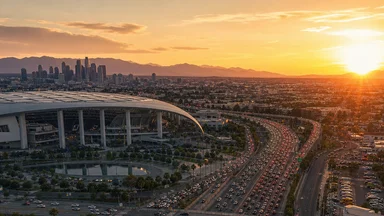
SoFi Stadium in Inglewood, California, will host World Cup matches on natural grass, but its roof is fixed and translucent, allowing natural light. SoFi's turf is grown on site using a hybrid Bermuda grass that is cultivated year-round. The stadium's climate is drier than Vancouver's, reducing the risk of waterlogging. However, SoFi's conversion from artificial to natural grass for the 2026 season will also involve palletized rolls, and the supplier, West Coast Turf, is the same one likely to serve BC Place. This consistency in supply chain could help BC Place avoid delays if the supplier can coordinate deliveries to both venues.
Another venue with similar challenges is the Melbourne Cricket Ground (MCG) in Australia, which hosts cricket, Australian rules football, and soccer. The MCG uses a drop-in pitch system for cricket, where the entire pitch is removed and replaced for different sports. While the MCG's system is designed for cricket pitches rather than full soccer fields, the concept of modular, removable surfaces is similar. The MCG's system takes about 3 days to install or remove, significantly faster than BC Place's 10–14 days. This speed is achieved through the use of pre-grown turf in trays that are craned into place, similar to the modular tray concept.
The cost of the MCG's drop-in system was approximately $1.5 million AUD in 2014, and it has been used for multiple events since. The system requires a dedicated storage area and crane access, which BC Place could potentially provide using its loading dock and adjacent parking structures. The main barrier is the initial investment, which the local organizing committee has not yet approved. However, if BC Place plans to host future tournaments, such as the 2026 World Cup or the 2030 Commonwealth Games (if Vancouver bids), the investment could pay off over multiple events.
An additional lesson comes from the 2018 World Cup in Russia, where several venues used natural grass grown in climate-controlled facilities. The grass was transported to stadiums in refrigerated trucks and installed using a roll system similar to BC Place's. The Russian organizers reported that the key to success was the 48-hour window for installation and the use of grow lights immediately after laying. They also emphasized the importance of having a backup supplier in case of crop failure. BC Place's supplier, West Coast Turf, has multiple farms in the Pacific Northwest, providing some redundancy.
Budget and Contingency Planning
The total budget for turf logistics across the seven matches is $4.2 million CAD, which includes the two conversions, grow lights, maintenance equipment, and a contingency fund of 10% for weather-related delays. This contingency is based on historical data showing a 10% probability of a major storm during the tournament window. If a storm occurs, the contingency would cover additional labor for drainage repairs, fungicide treatments, and potential overtime for grounds crews.
In addition to the turf budget, the local organizing committee has allocated $1.5 million CAD for temporary seating installation and removal, and $800,000 CAD for broadcast infrastructure. These costs are separate from the stadium's regular operating budget, which covers HVAC, lighting, and security. The total cost of hosting the seven matches at BC Place is estimated at $15 million CAD, including stadium upgrades, staffing, and event management. This figure is funded by a combination of federal, provincial, and municipal grants, as well as FIFA contributions.
One area of potential cost overrun is the roof operation. If the roof is closed for multiple matches, the increased use of grow lights and HVAC could drive up electricity costs. BC Place's power contract includes a peak demand charge, which could be triggered if the stadium draws high power during a closed-roof match. The operations team has modeled different scenarios and estimates that the roof-related energy costs could range from $50,000 to $150,000 CAD, depending on the number of closed-roof events. This is within the contingency budget, but if all seven matches require a closed roof, the costs could exceed estimates.
Another contingency is the possibility of a strike or labor shortage. The grounds crew for BC Place is unionized, and the local organizing committee has negotiated a no-strike clause for the tournament period. However, if there is a shortage of skilled labor for turf installation, the committee has identified backup crews from other stadiums in the region, including Lumen Field and Providence Park in Portland. These crews are familiar with the turf system and could be mobilized within 48 hours if needed.
Conclusion: A Test of Precision and Flexibility
BC Place's 2026 World Cup operations will test the limits of a multi-use venue. The retractable roof, while a valuable asset, adds complexity that fixed-roof or open-air stadiums do not face. The turf swaps require precise timing and significant investment. The weather risk demands constant monitoring and flexible decision-making. But if the tournament goes smoothly, the lessons learned could inform other venues in rainy climates, such as Seattle's Lumen Field or Amsterdam's Johan Cruyff Arena. For now, Vancouver's stadium staff are preparing for every contingency, from a heatwave to a deluge, knowing that the world's eyes will be on them.